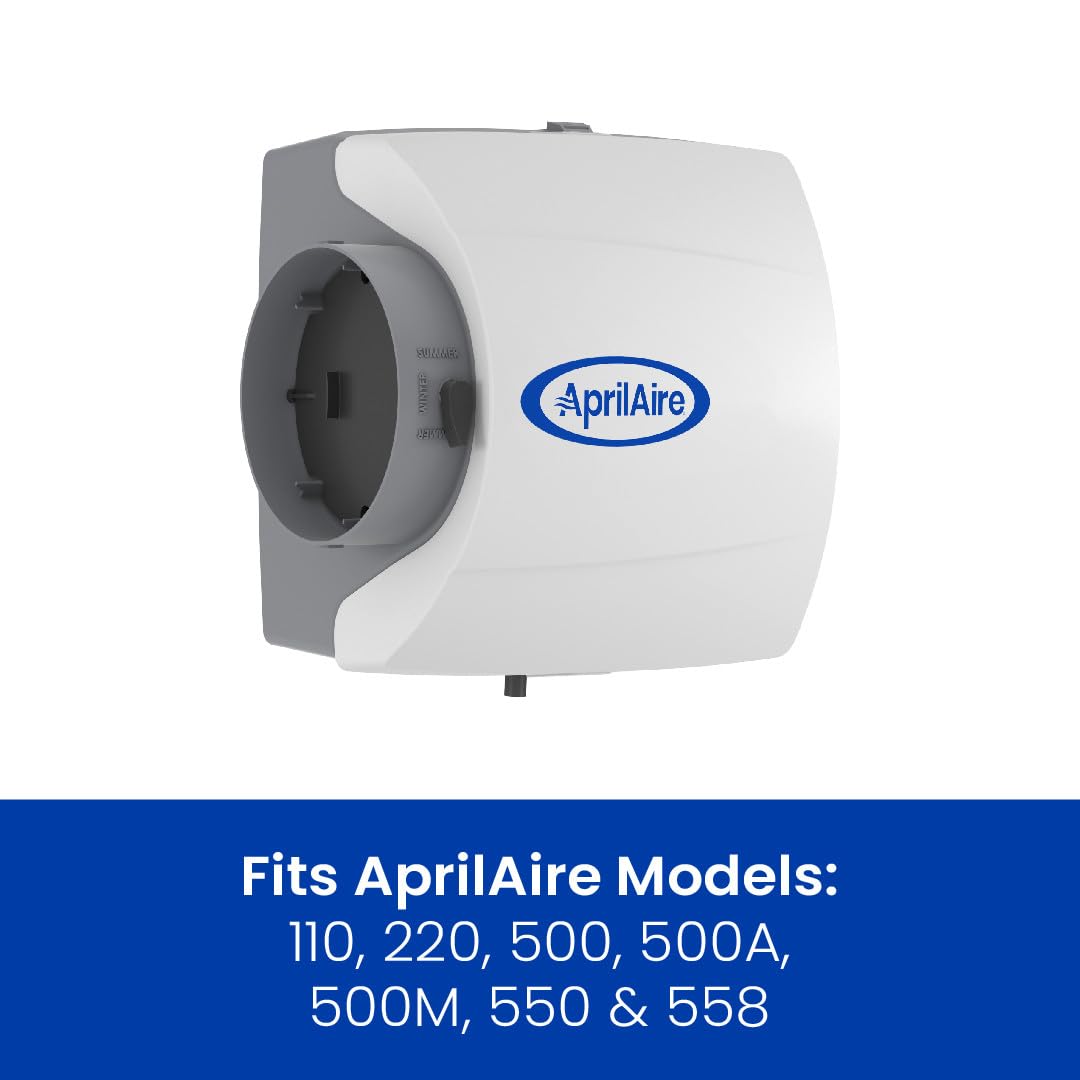
If you own or service an AprilAire whole-house humidifier — the kind that bolts onto your furnace or air handler and adds moisture to the air moving through your entire home — you already know the water panel needs to come out and get replaced on a schedule. The water panel (sometimes called an evaporator pad or media pad) is a rigid, foam-coated or aluminum-mesh insert that water trickles down while warm air passes through it. That exchange is how dry forced air picks up humidity before it reaches your living spaces. When the panel clogs with mineral scale — the white, chalky residue that hard water leaves on everything — the humidifier stops working efficiently, and sometimes stops working at all. Replacing it sounds like a five-minute maintenance task. The catch is that the replacement market is full of look-alike third-party panels that range from genuinely fine to quietly disastrous, and hard water can make even a good panel fail in half the expected time. This guide names the tradeoffs before it names the picks.
What the Water Panel Actually Does (and Why Scale Is the Real Enemy)
The water panel in a bypass or fan-powered flow-through humidifier like the AprilAire 600, 700, or 800 series isn’t a filter in the conventional sense — it doesn’t trap particles. Its job is surface area. Water from your supply line flows over the pad’s textured coating, creating a thin, evaporative film. The HVAC system’s airflow pulls moisture off that film and carries it through your ductwork. Per ASHRAE’s Handbook on HVAC Systems and Equipment, Chapter 21: Humidifiers (ASHRAE), efficient evaporative humidification depends on consistent wetting of the media surface and adequate airflow — both of which degrade when mineral deposits accumulate.
Hard water is defined by its dissolved mineral content, primarily calcium carbonate and magnesium. The U.S. Geological Survey categorizes water above 120 mg/L (about 7 grains per gallon) as hard; anything above 180 mg/L (10.5 gpg) is very hard. A significant portion of the U.S. — including much of the Midwest, Southwest, and Great Plains — falls in that upper range. When hard water evaporates on a water panel, those minerals don’t evaporate with it. They crystallize on the pad’s coating. Over a full heating season, that accumulation can reduce the pad’s effective surface area substantially, which means a humidifier rated at 0.75 gallons per day (GPD) may be delivering far less — possibly not enough to maintain your target relative humidity (RH) at all.
Building Science Corporation’s research report Moisture Control in Buildings (Building Science Corporation) underscores a related point: under-humidification isn’t just a comfort issue. Sustained indoor RH below 30% in cold climates correlates with increased respiratory irritation, static discharge events, and wood shrinkage in flooring and cabinetry. A clogged panel is a hidden IAQ failure that rarely announces itself until damage is already done.
OEM AprilAire Panels: What You’re Actually Paying For
AprilAire’s branded replacement panels — the 10 (for the 110/220), the 35 (for the 400/500/600 series), the 45 (for the 700), and the 80 (for the 800 steam hybrid) — are manufactured to the company’s own tolerance specs for coating density, substrate porosity, and dimensional fit. As of mid-2026, OEM panels retail between $18 and $38 depending on model, with the 35 being the most widely distributed and most frequently counterfeited.
The case for OEM comes down to three things:
1. Dimensional precision. AprilAire’s water distribution tray is calibrated to direct flow across the full face of the panel. A panel even 1/8” short in height means the top quarter of the media stays dry, reducing effective evaporative area and leaving a mineral-dry strip that becomes a cracking point over the heating season.
2. Coating chemistry. The foam coating on genuine AprilAire panels is formulated to remain hydrophilic (water-attracting) through repeated wet/dry cycles. Technical coverage in ACHR News (Water Quality and IAQ: What HVAC Contractors Need to Know, ACHR News Technical Features) notes that some generic panels lose hydrophilicity after 60–90 days of service, causing water to channel rather than sheet across the surface — a failure mode that looks like low humidity output and is frequently misdiagnosed as a solenoid or airflow problem.
3. Warranty implications. AprilAire’s product support documentation (Humidifier Water Panel Replacement Instructions and Maintenance Guide, AprilAire Product Support) explicitly states that use of non-OEM media does not automatically void the unit warranty, but scale damage attributed to improper media fit — causing water overflow or tray corrosion — is not covered under warranty claims. That’s a meaningful distinction if you’re specifying these units for clients under a multi-year service agreement.
Third-Party Panels: Three Tiers, Three Very Different Risk Profiles
Not all third-party panels are equal, and dismissing them categorically would be dishonest. The market breaks into roughly three tiers, each with distinct cost, performance, and warranty implications.
Tier 1 — Licensed or OEM-Equivalent Panels
A handful of IAQ suppliers manufacture to AprilAire’s published dimensional specs under their own brand. These are typically sold through HVAC wholesale distributors rather than mass-market retail channels. Long-run installer feedback documented in ACHR News technical features notes performance parity with OEM when water quality is moderate (under 7 grains per gallon). The cost savings are modest — usually $4–$8 per panel — but for a contractor buying in cases across a service contract portfolio, that compounds meaningfully over a heating season.

Honeywell
$10.97
In stock on Amazon
Check price on AmazonTier 2 — Generic “Compatible” Panels
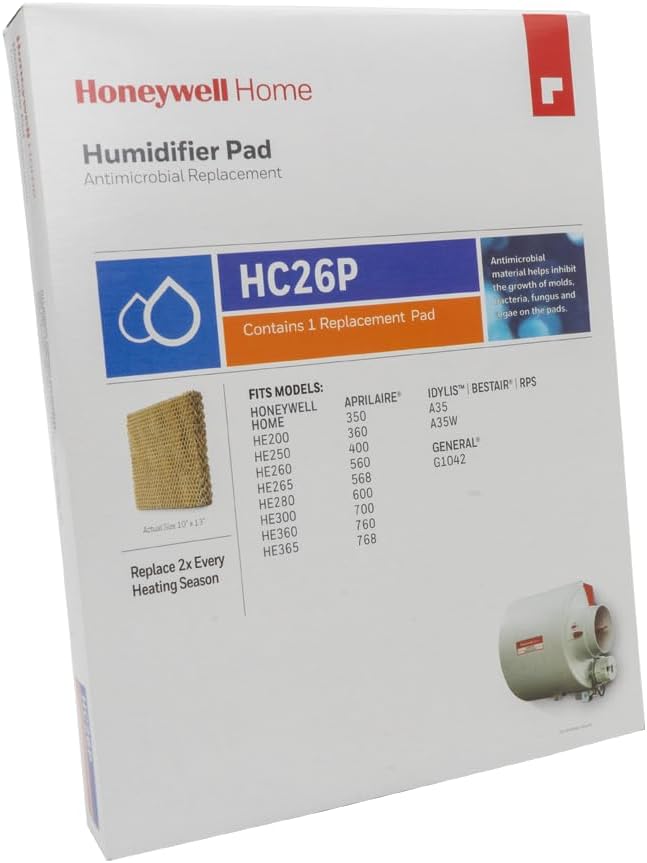
These are the products flooding marketplace channels, often listed as fitting multiple brand models simultaneously. The red flags in aggregated installer reviews are consistent: slightly undersized frames, inconsistent foam density, and accelerated mineral bonding to the substrate. This last point matters acutely in hard-water markets — some generic coatings appear to provide nucleation sites for calcium carbonate crystals, meaning scale adheres faster and more tenaciously than it does to OEM media. A panel that’s nominally cheaper at purchase can double the number of service visits required per season, erasing the savings quickly.
Honeywell
$13.97
In stock on Amazon
Check price on AmazonTier 3 — Counterfeit OEM Packaging
This is the warranty trap. Panels arriving in authentic-looking AprilAire retail boxes but with incorrect part numbers, lighter substrate weight, and no lot code on the media itself have been reported by HVAC contractors in ACHR News technical forums and in contractor trade discussions covered by Contracting Business. AprilAire’s authorized distributor documentation specifies that warranty claims related to media performance on units sourced through unauthorized channels — including third-party marketplace sellers — may not qualify for full warranty support. The exposure lands on whoever specified the part, which means the contractor, not the homeowner, often absorbs the callback cost.
Nu 4190-02
$32.39
In stock on Amazon
Check price on AmazonComparison at a Glance
| Panel Source | Typical Cost (2026) | Expected Season Life — Soft Water (<7 gpg) | Expected Season Life — Hard Water (>10 gpg) |
|---|---|---|---|
| AprilAire OEM | $18–$38 | 10–12 months | 4–6 months |
| Tier 1 licensed generic | $12–$28 | 9–11 months | 4–5 months |
| Tier 2 generic | $7–$16 | 6–9 months | 2–4 months |
Life estimates based on published manufacturer guidance and aggregated contractor-reported service intervals; actual results vary with GPD usage and water chemistry.
The Hard-Water Trap: Your Real Cost-of-Ownership Math
Here’s where the intermediate-practitioner decision frame matters most. If you’re in a soft-water market (under 5 gpg), the OEM vs. third-party decision is largely a question of dimensional fit and coating quality — meaningful but not urgent. If you’re in a hard-water market (above 10 gpg), you’re playing a different game entirely.
At 10+ gpg, an AprilAire 600 running at its rated 0.74 GPD output through a five-month heating season will deposit a substantial accumulation of mineral scale on the water panel and distribution tray if the situation is not actively managed. This Old House’s HVAC maintenance coverage (How to Replace a Whole-House Humidifier Filter, This Old House Plumbing & HVAC guides) recommends mid-season inspection in hard-water markets — specifically checking for tray overflow caused by scale blocking the drain, which can send water backward into the furnace plenum.
The math that changes the decision: if you’re replacing an OEM panel twice per season because of hard-water scaling, you’re spending $36–$76 annually on panels alone, plus the labor or time cost of two service visits. Three interventions make more economic sense than a perpetual replace-and-scale cycle:
1. Scale Intercept media panels. AprilAire offers Scale Intercept technology on select 700-series models. Per AprilAire’s product support documentation, Scale Intercept panels use a treated media that reduces mineral bonding and are rated for hard water up to 20 gpg. They cost approximately $10–$15 more per panel than standard OEM media but extend effective service life meaningfully in hard-water conditions — enough to reduce a two-replacement-per-season schedule to one in most markets below 15 gpg.
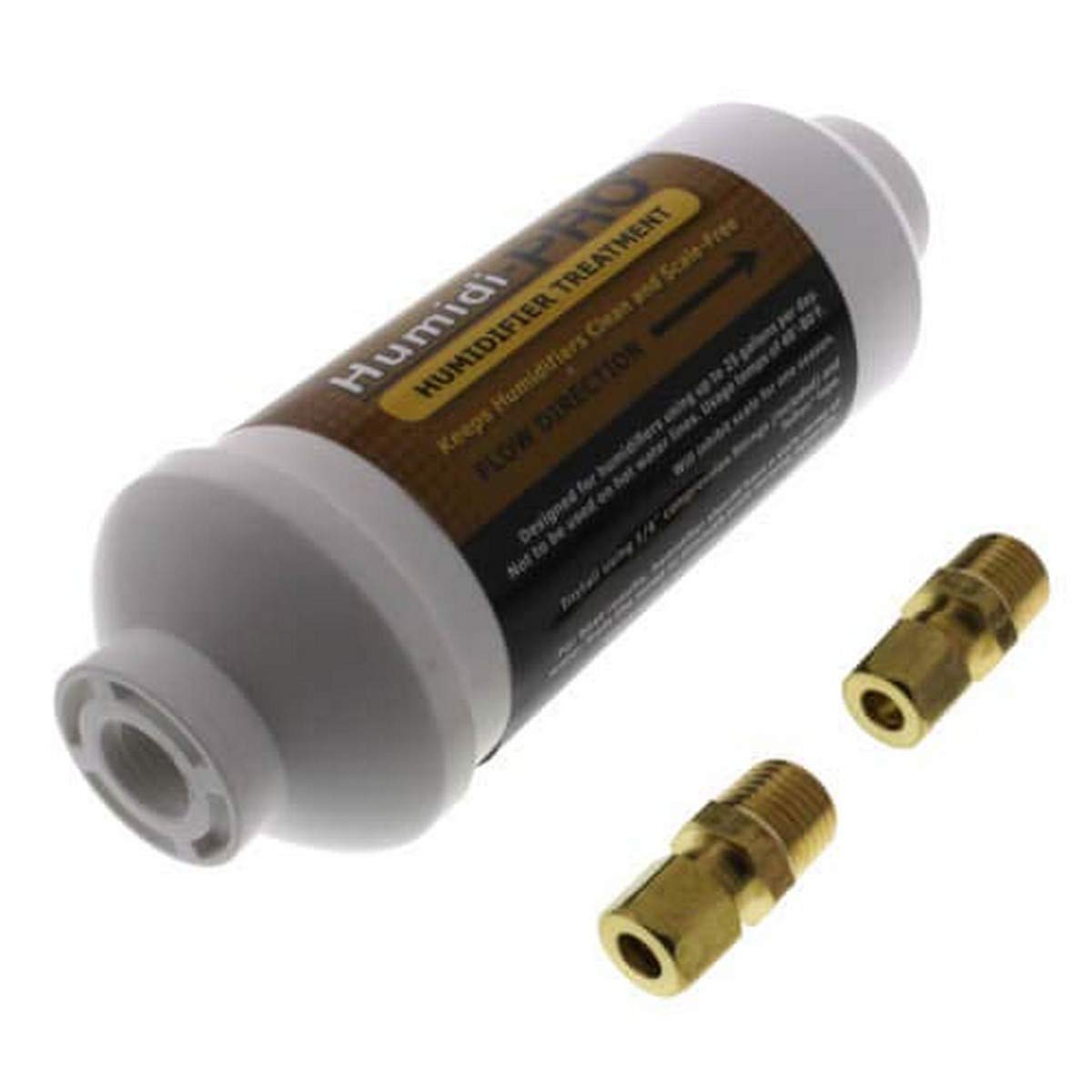
2. Inline water treatment. A phosphate-based scale inhibitor installed upstream of the humidifier solenoid valve can reduce mineral deposition significantly, per technical data cited in ACHR News’s coverage of water treatment for HVAC equipment (Water Quality and IAQ: What HVAC Contractors Need to Know, ACHR News Technical Features). This is a one-time installation cost that pays back quickly in markets above 15 gpg by extending both panel life and distribution tray life.
3. Drain-through vs. recirculating configuration. Bypass humidifiers in drain-through mode — where water continuously flows across the panel and exits to drain rather than recirculating — inherently flush minerals out before they fully crystallize on the media surface. ASHRAE’s humidifier guidance (ASHRAE Handbook, Chapter 21: Humidifiers, ASHRAE) specifically recommends drain-through operation in hard-water markets despite the higher water consumption, because the alternative is concentrated mineral brine cycling repeatedly across the pad. If your unit is configured for low-drain or recirculating operation to conserve water, scaling accelerates substantially and mid-season panel replacement becomes nearly unavoidable.
The If/Then Decision Framework
If your water hardness is under 7 gpg and you’re servicing one or two residential units under a standard annual maintenance agreement: a Tier 1 licensed generic from a reputable HVAC wholesale distributor is defensible. The cost savings across a service contract portfolio are real, and performance parity with OEM is well-documented at this water hardness level in contractor technical literature.
If your water hardness is above 10 gpg: use OEM AprilAire media — specifically Scale Intercept panels if the unit model supports them — and pair with an inline scale inhibitor. The cost delta over a generic pays back within one season in avoided callbacks and tray replacement costs.
If you’re specifying for a client under a multi-year service agreement and you don’t yet know the water hardness: the right move is a water hardness test strip from any plumbing supply house before the first panel goes in. One test avoids a season of premature failures and the credibility cost that comes with them.
If you’re sourcing panels through any online marketplace rather than a stocking HVAC distributor: verify the seller’s authorized dealer status before purchase, regardless of brand. Counterfeit panels in genuine packaging are a documented pattern in this category — not a hypothetical — and the warranty exposure lands on whoever specified the part.
The water panel is the humidifier’s primary consumable. Get the water chemistry assessment right first, then optimize the panel selection around it. In that order, not the reverse.